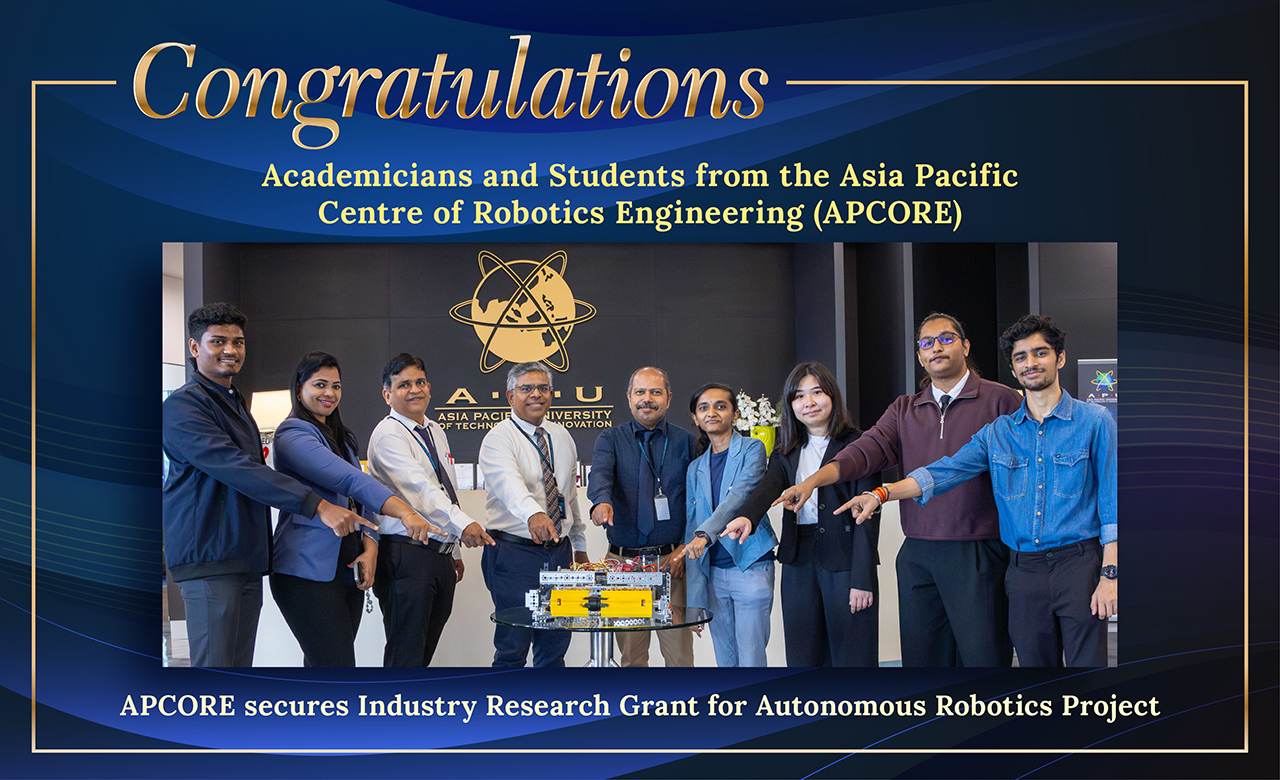
A team of academicians and students from the Asia Pacific Centre of Robotics Engineering (APCORE) at Asia Pacific University of Technology & Innovation (APU) has secured a RM12,500 research grant from World of Robotics Sdn Bhd to design, build, and deliver an autonomous puck collector robot.
| Academician | Student |
| Dr Adeline Sneha John Chrisastum (Senior Lecturer, School of Computing at APU), Ts Dr Arun Seeralan Balakrishnan (Assistant Professor, School of Engineering at APU), Professor Ir EUR ING Ts Dr Vinesh Thiruchelvam (Chief Innovation & Enterprise Officer of APU), and Ts Suresh Gobee (Senior Lecturer and Head of APCORE, School of Engineering at APU) | Thasne Rames, Chan Hui Xin, Arsha Raf Arli @ Wai Yan Myo, and Ved Ashishbhai Panchal |
Founded in 2011, World of Robotics is one of Malaysia’s leading Science, Technology, Engineering, and Mathematics (STEM) education organisations, dedicated to providing robotics education through hands-on training, workshops, and competitions for students across more than 300 schools and educational institutions nationwide.
The collaboration was formalised through a Contract Research Agreement between APU and World of Robotics, reflecting APU’s commitment to advancing applied research through meaningful industry partnerships, while providing students with valuable opportunities to contribute to real-world engineering projects.
Building a Competition-Ready Autonomous Robotics Solution
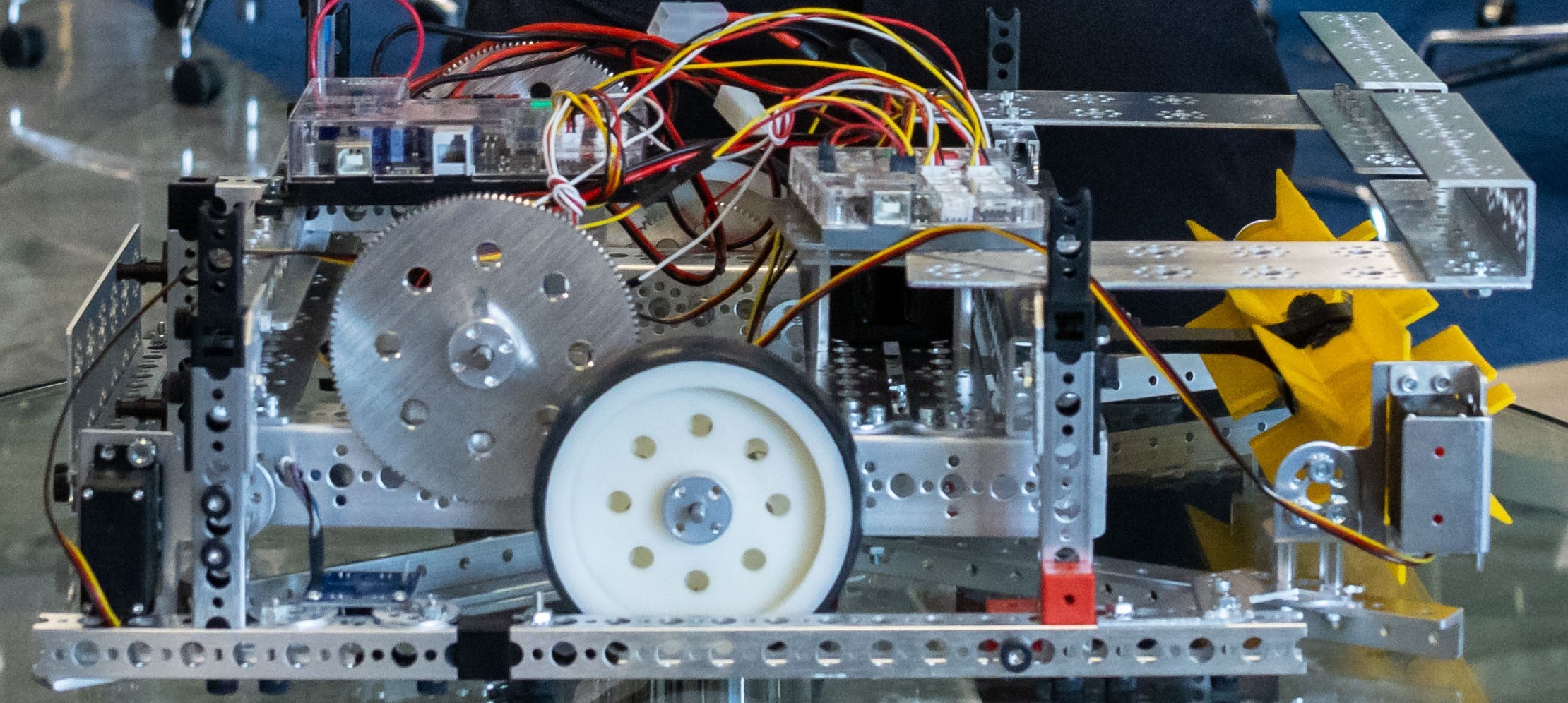
The autonomous puck collector robot was developed as an industry-driven robotics project aimed at supporting World of Robotics’ student training and competition programmes.
The project involved designing and building a fully autonomous system capable of navigating independently, identifying designated pucks, collecting them efficiently, and transporting them to a predefined collection zone with minimal human intervention.
Developed in preparation for the International Robot Challenge (IRC), the robot was designed to meet specific competition and engineering requirements, including a strict 50 cm x 50 cm footprint.
Throughout the development process, the APCORE team focused on optimising the robot’s mechanical structure, component arrangement, and collection mechanism to achieve a balance between mobility, stability, and operational efficiency.
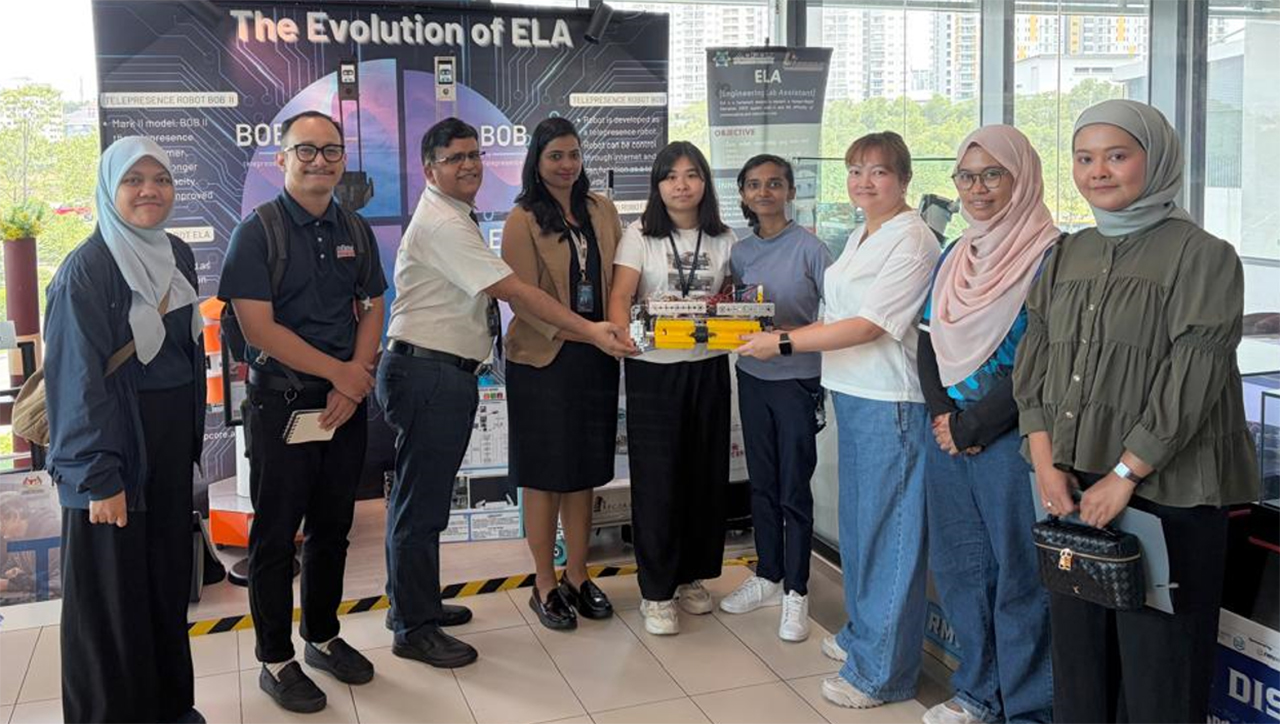
The completed prototype demonstrated the APCORE team’s ability to translate engineering concepts into a functional robotics solution, showcasing the application of autonomous systems, mechanical design, and embedded technologies in addressing practical challenges within the robotics field.
Reflecting on the project, Dr Adeline underscored the importance of strong university-industry partnerships in translating research into practical innovation.
“Bridging the gap between corporate expectations and academic innovation requires active collaboration, and this project demonstrates how industry-backed parameters enable our research hubs to deliver practical, real-world solutions within tight timelines.”
Engineering Innovation within Strict Design Constraints
Reflecting on the experience, Dr Arun noted that working directly with an industry partner like World of Robotics exposed the APCORE team to authentic engineering challenges.
“One of the key technical challenges involved designing a robot capable of operating within a fixed 50 cm x 50 cm footprint, while maintaining the performance required for autonomous competition.
“The APCORE team carefully optimised the robot’s mechanical structure, component placement, and puck collection mechanism to maximise efficiency without compromising stability or manoeuvrability,” he said.
The final prototype successfully balanced compact design with robust functionality, enabling it to autonomously identify, collect, sort, and transport pucks, while satisfying all operational and mechanical benchmarks established by World of Robotics.
Strengthening APU’s Applied Research and Innovation Ecosystem
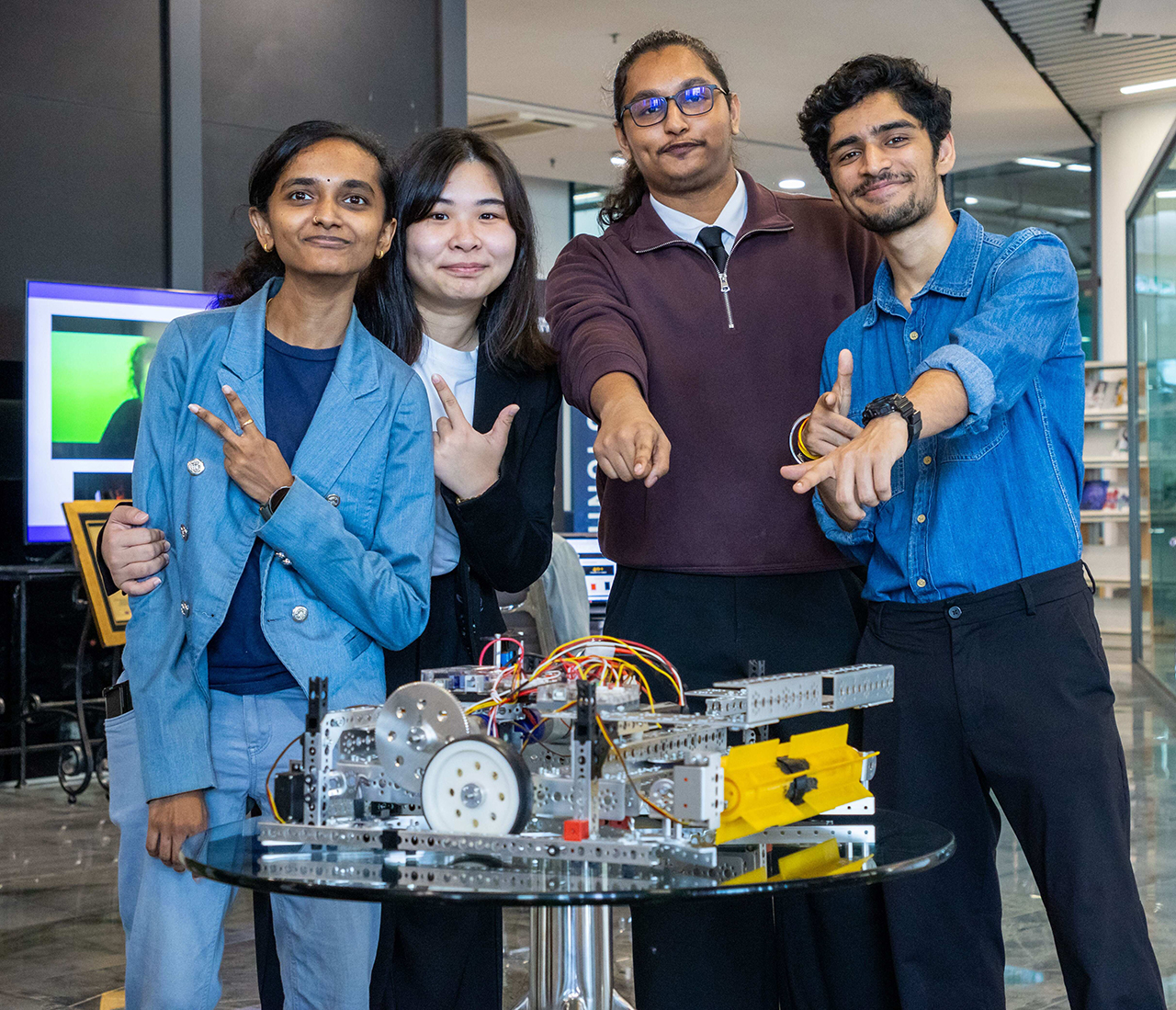
Ts Suresh highlighted that the project reflects APCORE’s role as both a student development platform and a research and development hub, where students gain hands-on experience by working directly with industry partners to deliver engineering solutions that meet real market requirements.
“By engaging in projects with real deliverables and industry expectations, students are better prepared to transition from academic learning to professional engineering environments.”
Echoing this sentiment, Prof Vinesh noted that industry-driven collaborations play an important role in transforming academic research into practical and commercial applications.
He emphasised that projects such as the autonomous puck collector robot provide students with opportunities to develop entrepreneurial thinking, while contributing to the advancement of Malaysia’s digital automation ecosystem.
News & Happening
Download e-Brochures
Intake Calendar
Want to know more ?
Let’s Connect