More than 500 participants gained practical insights into evolving financial scams as APU hosted the nationwide #JanganKenaScam 2.0 fraud literacy programme, reinforcing a simple message: stay informed, think critically and verify before acting.
Image
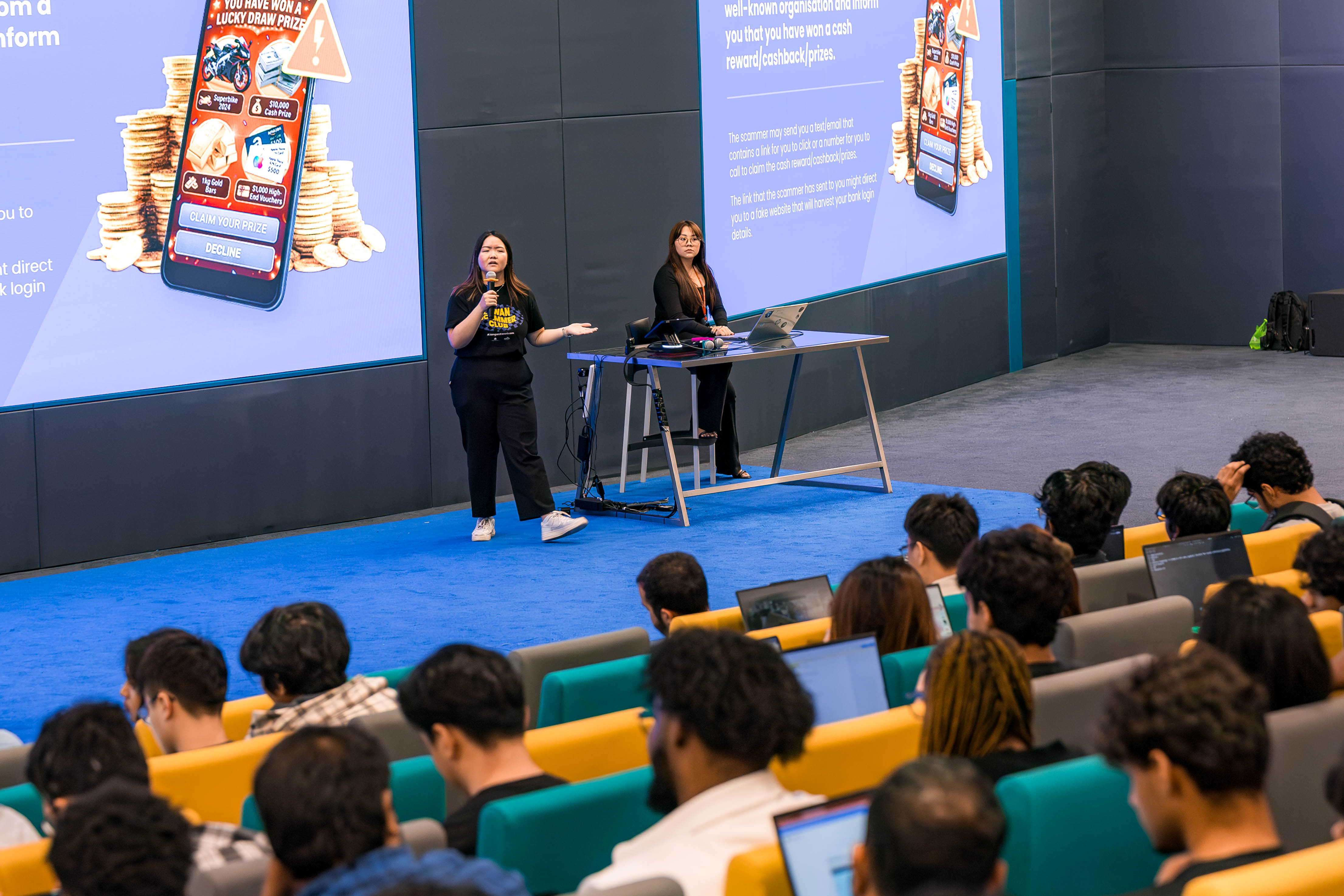
“Scams can happen to anyone. No one is completely immune, regardless of their education or professional background.”
That reminder took centre stage at Asia Pacific University of Technology & Innovation (APU) on 21 July 2026, as about 530 students and academics gathered for the #JanganKenaScam 2.0 Fraud Literacy Programme.
Co-organised by the Association of Banks in Malaysia (ABM) and the Association of Islamic Banking and Financial Institutions Malaysia (AIBIM), with the support of Bank Negara Malaysia, the programme returned to APU following its inaugural edition at the University in 2024.
Led by Associate Professor Dr Thang Ka Fei, Senior Head of School, School of Technology (SoT), APU supported the campaign by hosting the programme and bringing together participants from the Schools of Technology, Computing, and Accounting & Finance.
Scammers Evolve, So Must Public Awareness
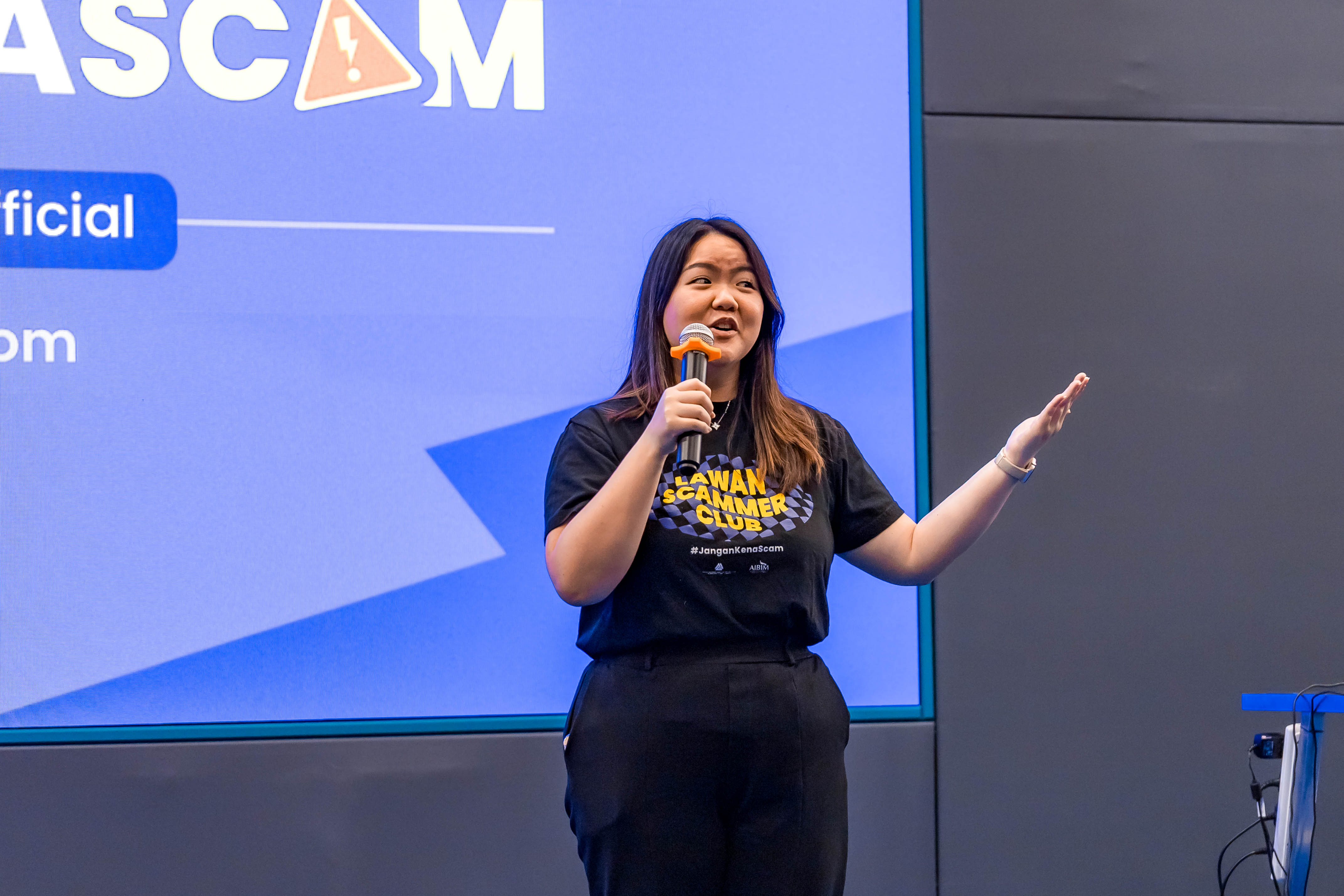
The awareness session was delivered by Ms Yvonne Yong Yu Wei, Case Management Officer, Wealth Management & Transaction Banking Division, Public Bank Berhad, who plays an active role in scam education through awareness materials and stakeholder roadshows.
Using practical scenarios, videos and interactive questions, she unpacked seven common threats: impersonation, malware, job, online shopping, cash reward, QR code and deepfake AI scams.
Impersonation scams, she explained, often rely on urgency and fear, with fraudsters posing as police, government agencies, banks, e-commerce platforms or even family members. Participants were advised to pause and independently verify suspicious calls or messages using trusted contact details.
Malware scams may involve suspicious links, APK files or unofficial applications designed to steal credentials or monitor devices.
“Don’t simply download apps. If you see an application promoted through social media or an unfamiliar link, go directly to the official app store instead,” Yvonne advised.
Too Good to Be True? Stop and Check
Job scams were another major concern, especially offers promising immediate employment, high earnings or commissions for simple online tasks.
Scammers may initially pay small amounts to gain trust before requesting “processing fees” or payments to unlock larger commissions. Yvonne reminded participants that an employer should pay an employee — not the other way around.
Online shoppers were similarly cautioned against unusually attractive deals and requests to make payment outside official e-commerce platforms.
“If the deal is too good to be true, it is probably fake,” she said.
Cash reward and QR code scams were also highlighted. Fraudulent links may imitate legitimate organisations and capture banking details, while malicious QR codes can redirect users to fake websites or unauthorised payment accounts.
If scammed, participants were advised to activate their bank’s Kill Switch, contact the bank’s fraud hotline, lodge a police report and call the National Scam Response Centre at 997.
AI Adds a New Layer of Deception
Deepfake AI scams drew particular attention as increasingly realistic AI-generated images, videos and voice recordings can impersonate public figures, influencers or trusted individuals.
Yvonne urged participants to question extraordinary claims, particularly advertisements promising guaranteed investment returns.
“Don’t believe everything that you see on the Internet,” she said.

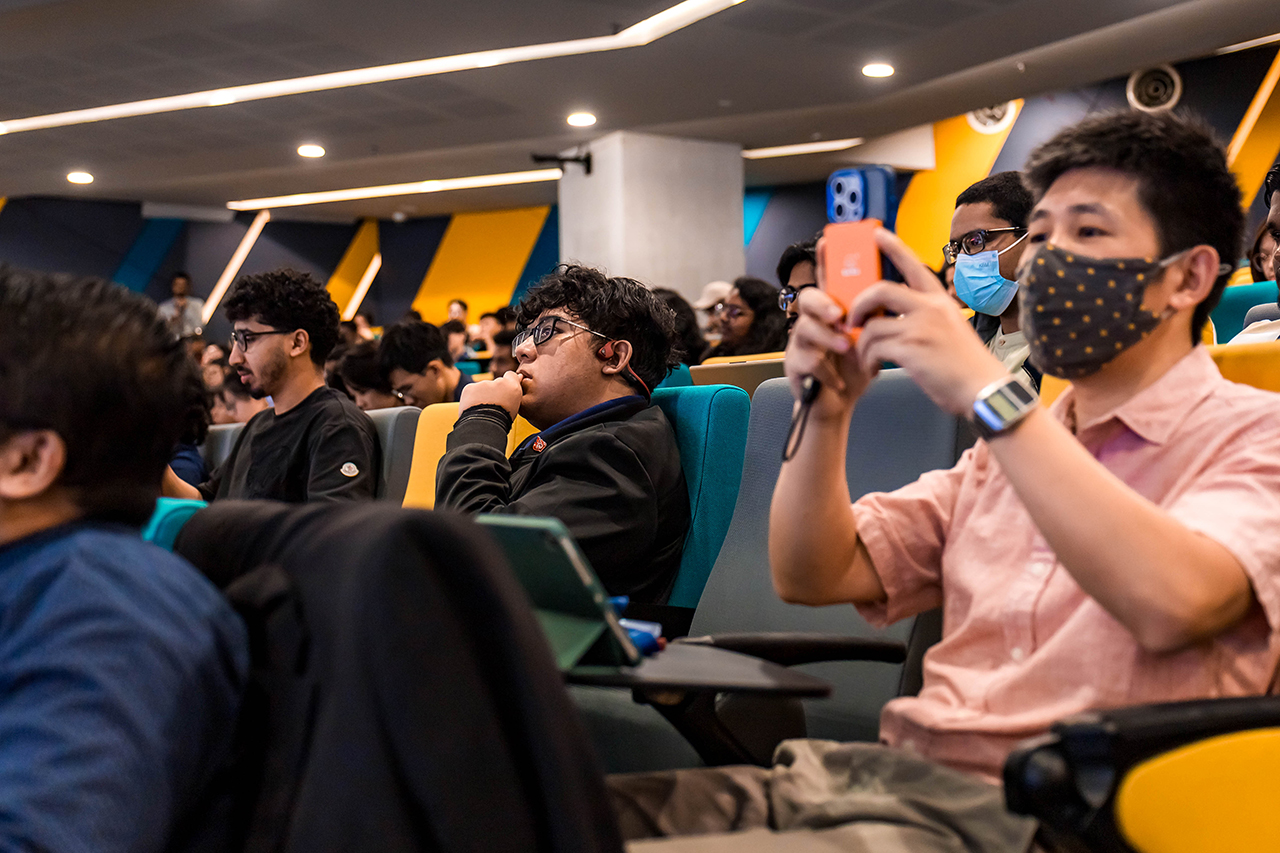
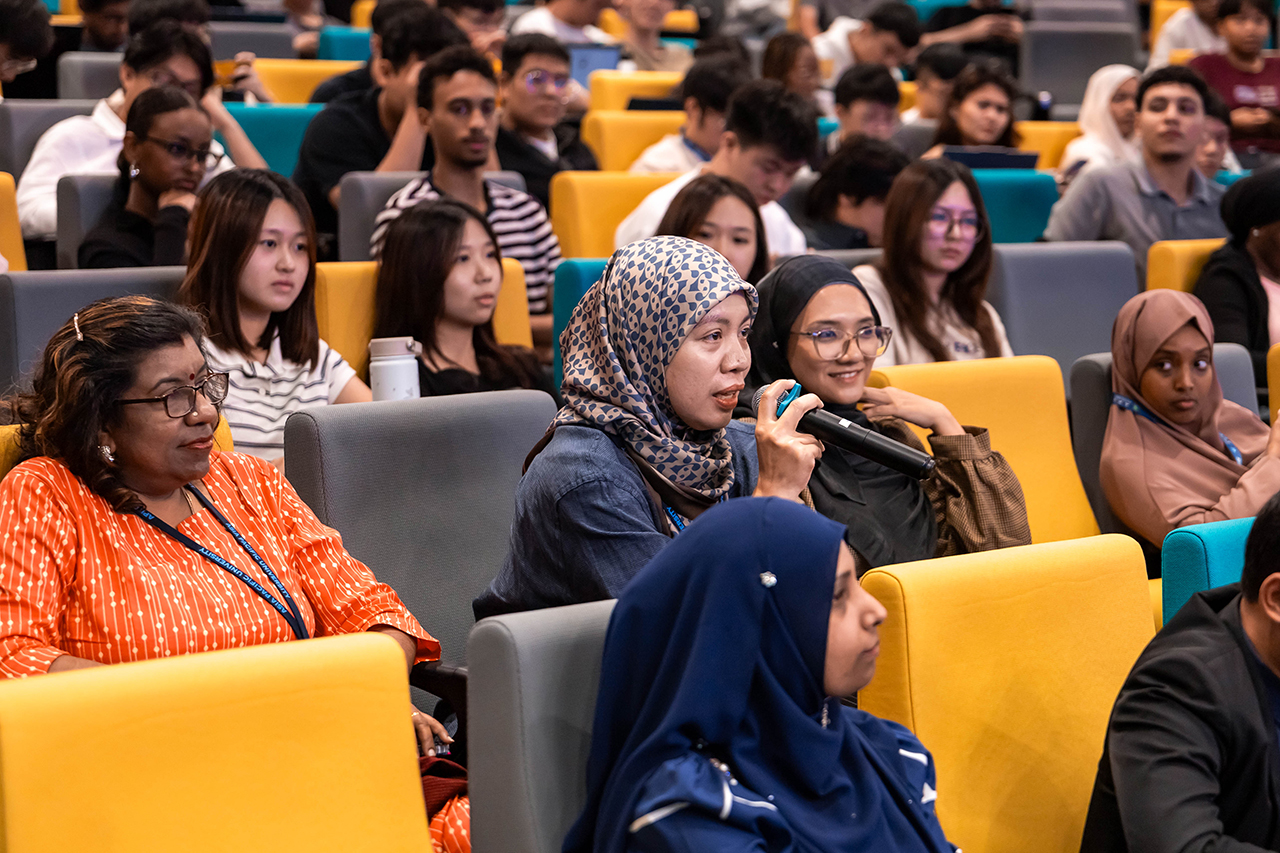
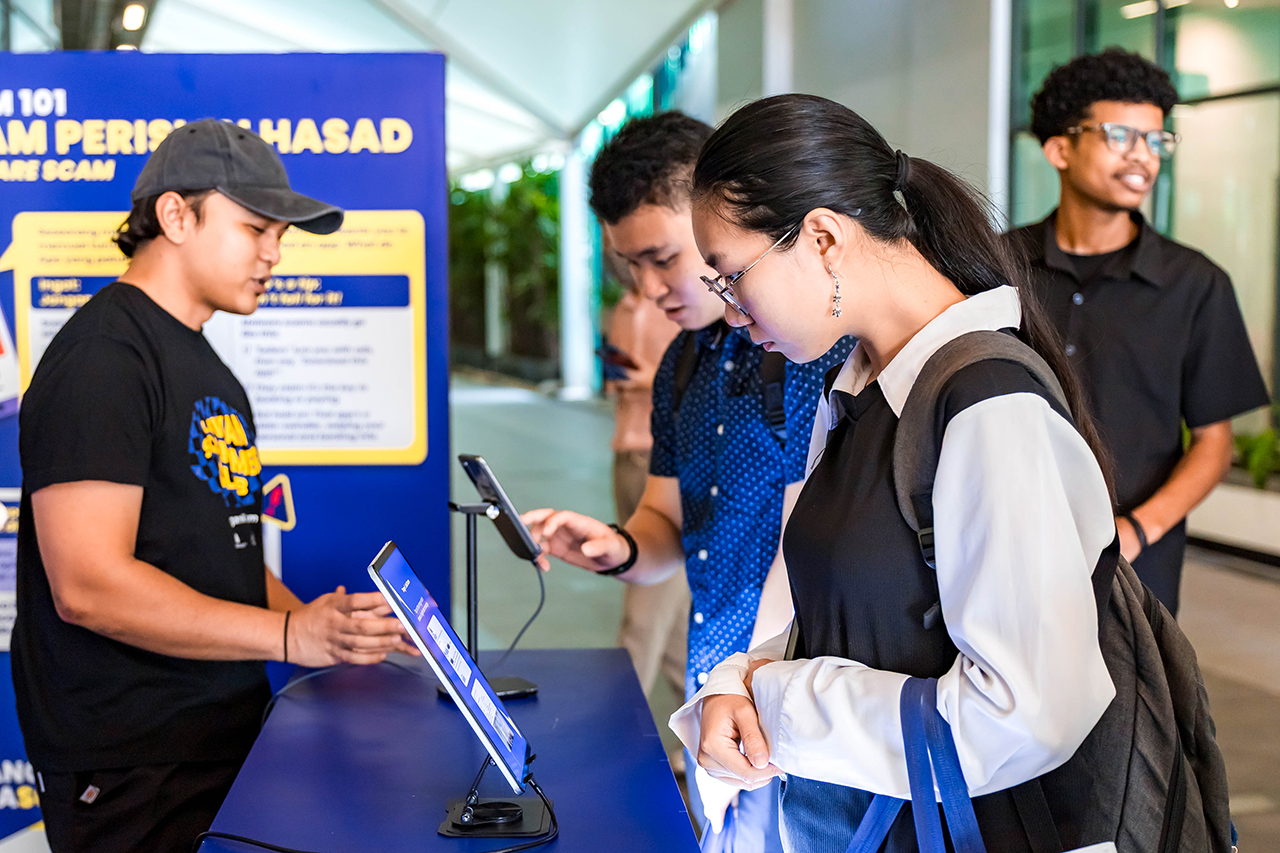
Beyond the talk, participants joined a lively quiz and real-case sharing session, while an interactive educational booth allowed students to experience simulations of different scam scenarios and understand how victims can be manipulated.
Students Take the Message Beyond Campus

Participants said the programme strengthened their awareness and encouraged them to share what they had learnt with others.
| Participant | Reflection |
| Lee Junn Xuan Diploma in ICT | “Having just turned 18, I found the session both engaging and eye-opening. It made me more aware of evolving online scams and the importance of safeguarding personal information.” |
| Elwin Chin Jun Xiang Diploma in ICT | “While scammers will continue to evolve their tactics, the best defence is to stay informed, think critically and always verify suspicious claims before taking any action.” |
| Iman Natasya Binti Ibrahim Diploma in ICT with a specialism in Software Engineering | “I now feel better equipped to protect myself and will share these valuable lessons with my family and friends.” |
| Paul Vincent Christopher Mosunallee MSc in Information Technology Management | “The talk significantly raised my awareness of scam tactics and taught me how to better protect myself.” |
| Zainab Shehu Adamu MSc in Information Technology Management | “If something seems too good to be true, it probably is a scam. The session was a timely reminder to stay vigilant, think critically and always verify information.” |
The strong response to #JanganKenaScam 2.0 reaffirmed APU’s commitment to strengthening financial literacy and digital vigilance through industry collaboration and community-focused education.
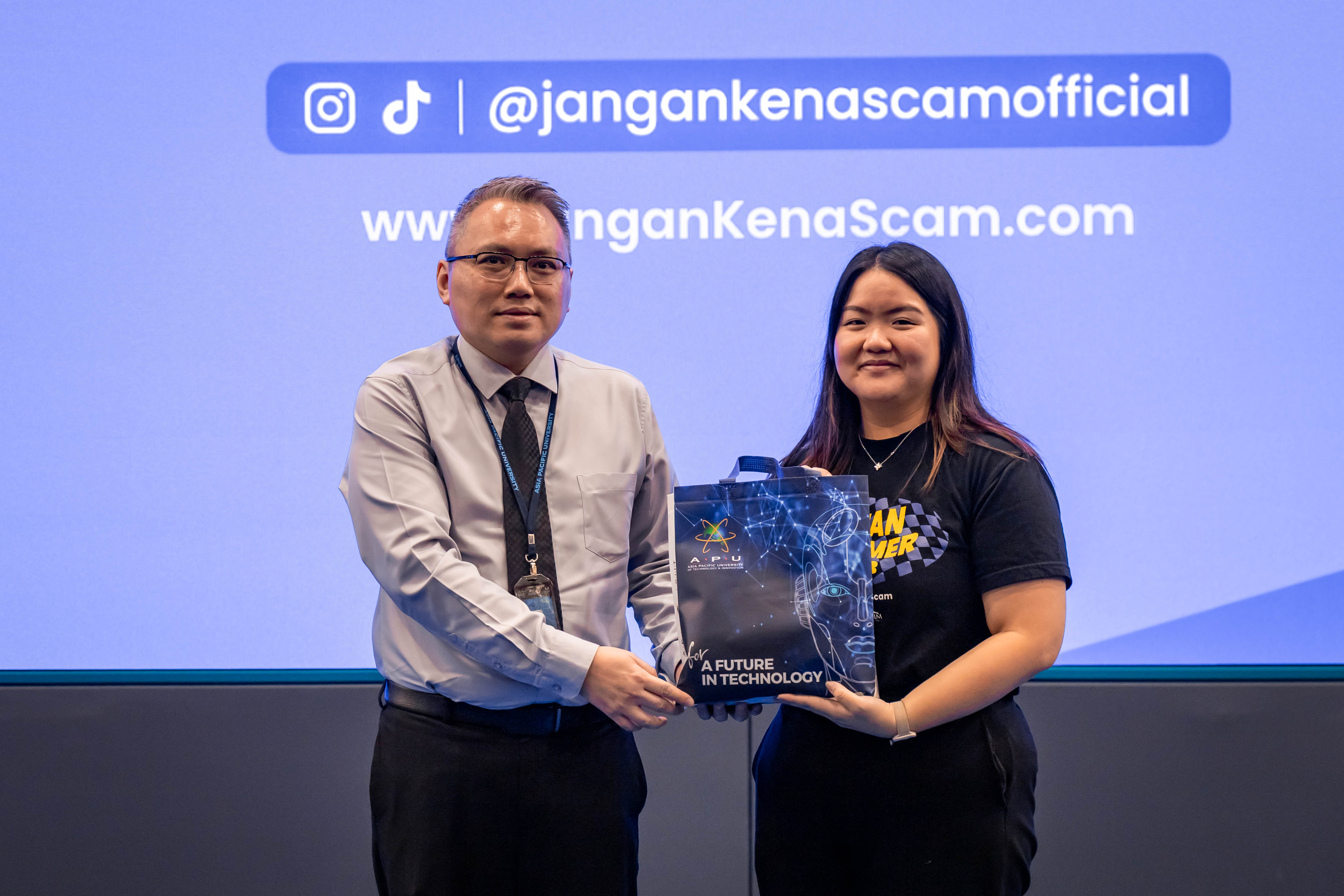
APU’s working committee comprised Ts Muhammad Amin Sahari, who served as the liaison between APU and Public Bank, together with Ms Nurin Amirah Abdul Rahman, Ts Derrick Chow Kam Yuen, Ms Siti Nurul ‘Aqilah Mohd Haron and Mr Darveen Selvarajah.
News & Happening
Download e-Brochures
Intake Calendar
Want to know more ?
Let’s Connect