Image
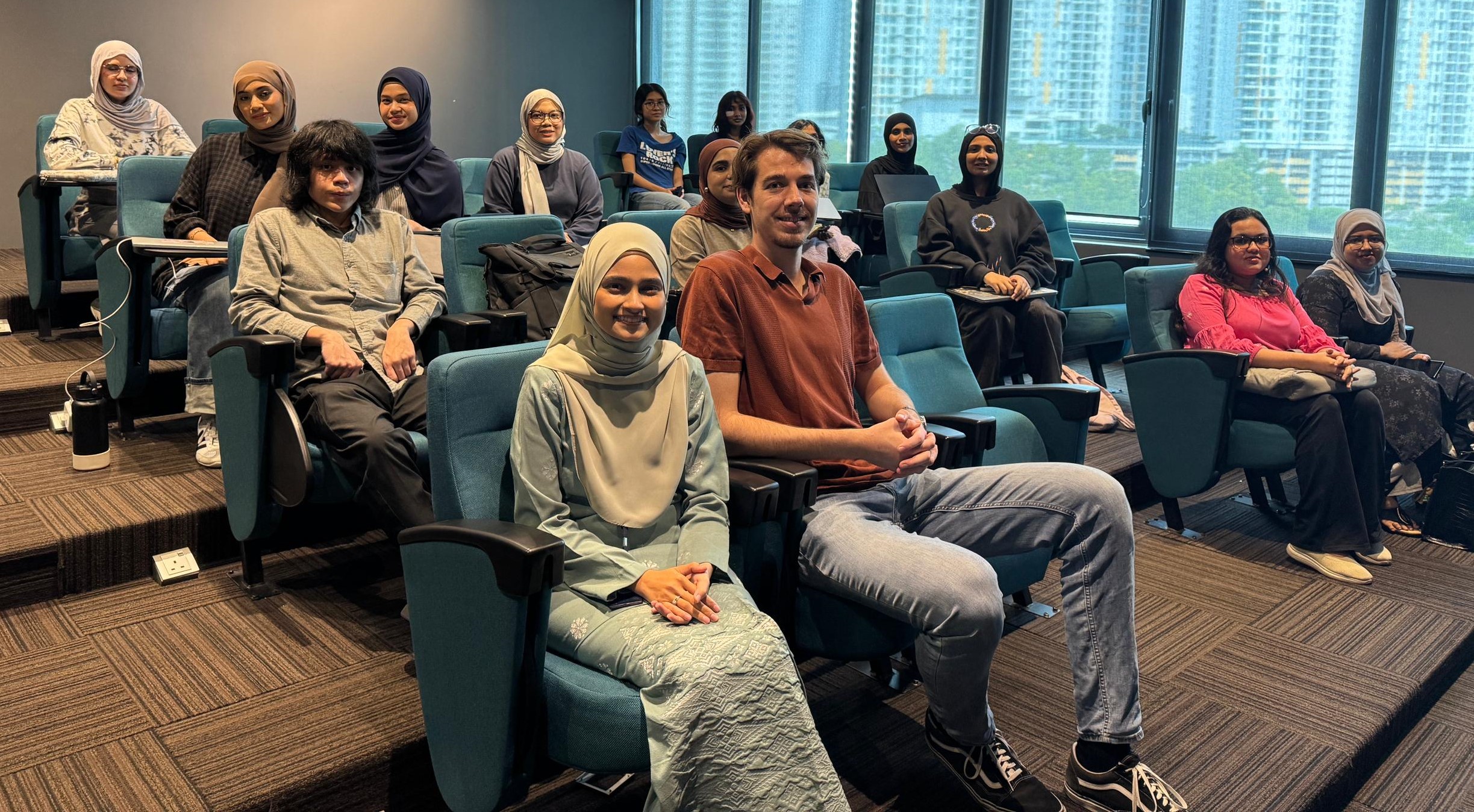
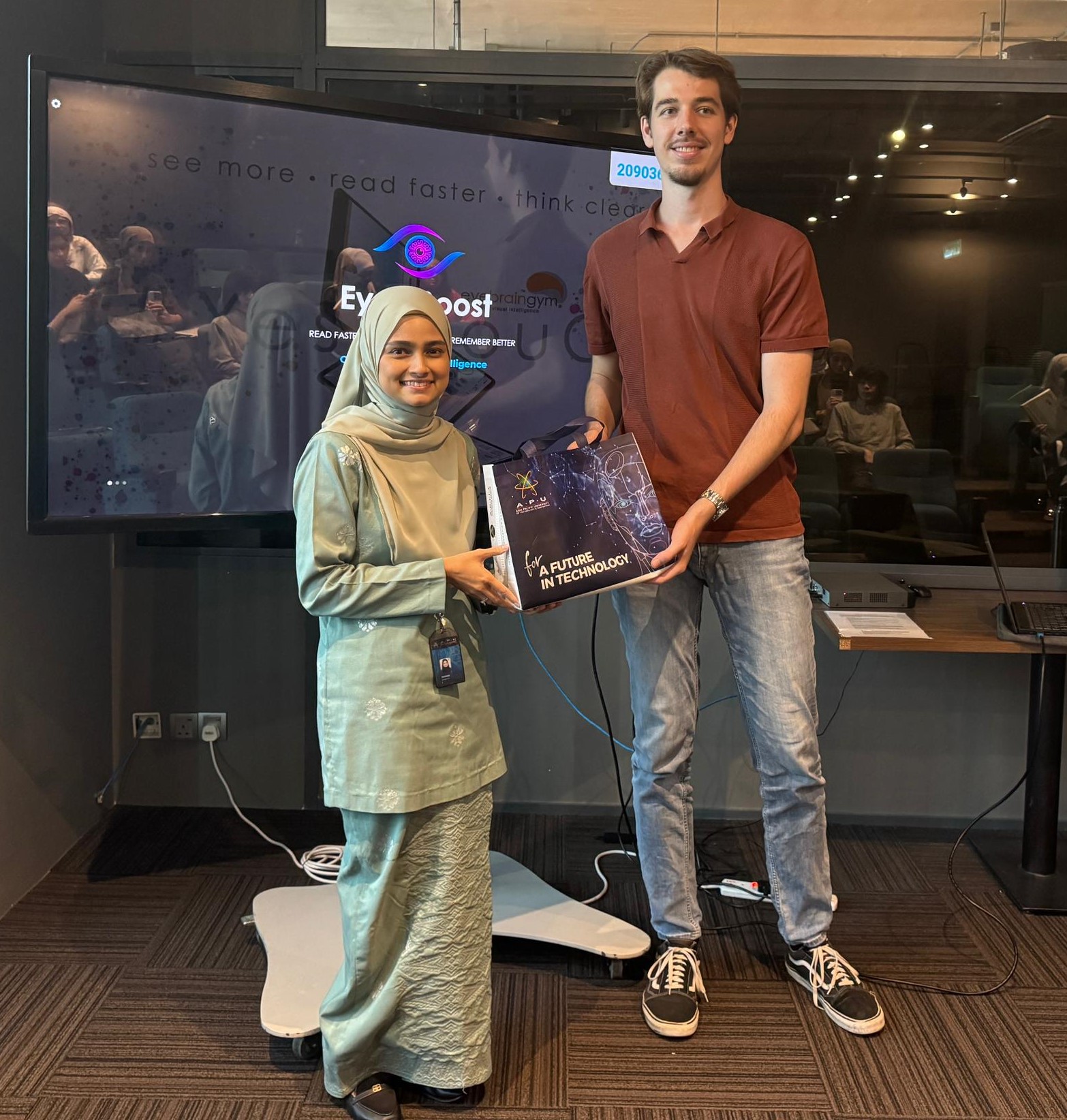
As part of the Cognitive Psychology module, the School of Psychology (SoP) at Asia Pacific University of Technology & Innovation (APU) recently organised a guest lecture, featuring Mr Reuben Bykersma, Founder of EyeQBoost (education-based initiative dedicated to helping students strengthen their learning through cognitive and visual training).
Led by Ms Raihan Munira Moh Sani (Lecturer, SoP at APU), the guest lecture enabled Psychology students to explore the cognitive processes involved in reading, attention, and information processing by examining how the brain receives and interprets information.
Mr Reuben’s expertise provided students with valuable perspectives on developing more effective learning approaches through cognitive and visual training techniques, while highlighting the importance of strengthening focus, processing efficiency, and learning strategies to support academic growth.
Exploring the Cognitive Processes Behind Learning
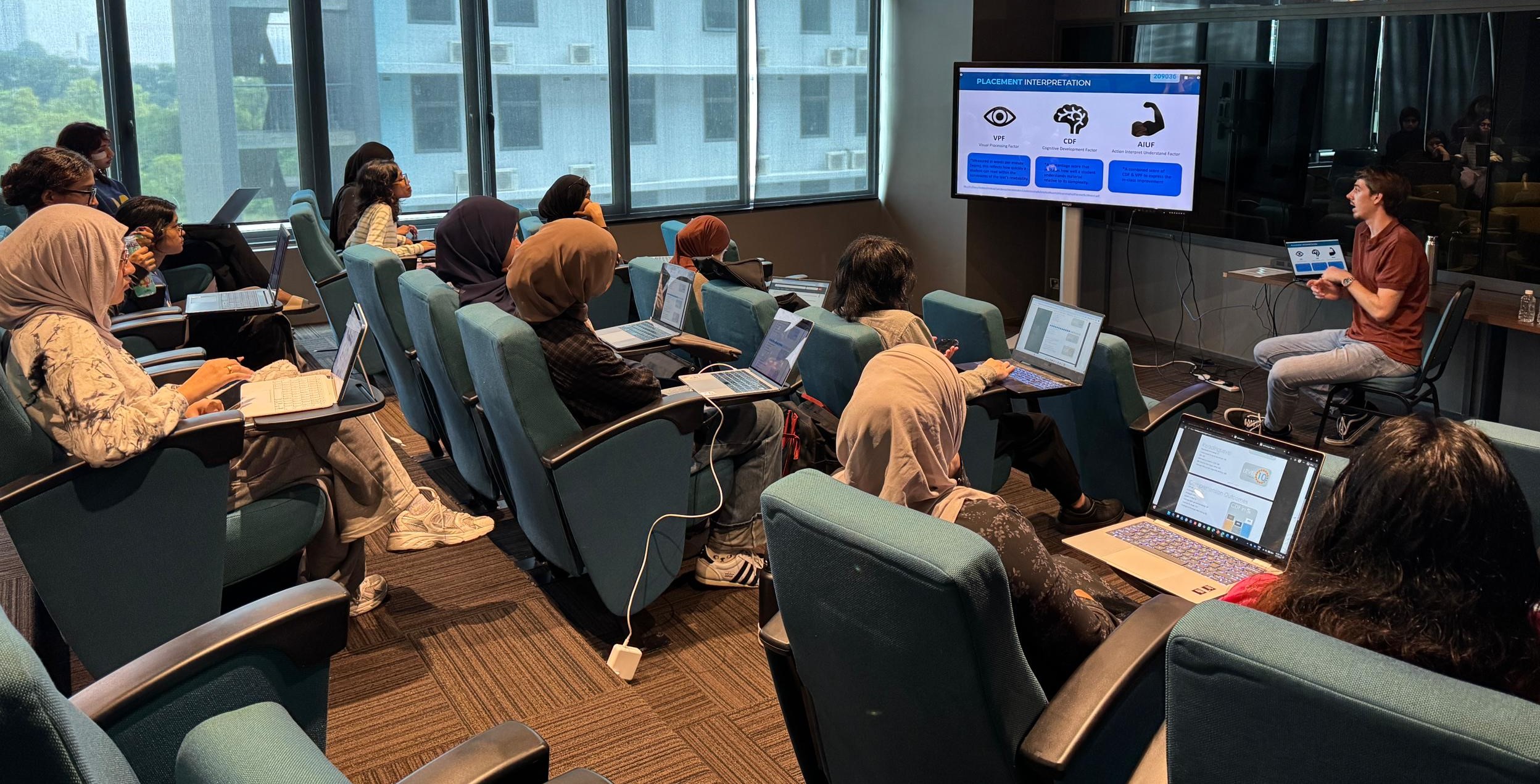
The session began by examining the challenge of information overload, with Mr Reuben highlighting how students are constantly exposed to information from lectures, textbooks, digital platforms, and social media.
Amid this growing flow of information, he explained that effective learning depends not only on the amount of knowledge available, but also on how efficiently individuals process, understand, and retain it.
To address this challenge, Mr Reuben introduced EyeQBoost’s approach to improving learning through visual exercises and gamified activities designed to strengthen the connection between the eyes and the brain.
Through this approach, students learned how visual processing, attention, and focus influence reading performance, while recognising that these cognitive functions can be developed through consistent practice.
Building on this understanding, the session further explored how eye movements affect reading efficiency, demonstrating that reading speed and comprehension can be improved together through more effective visual processing rather than simply reading faster.
Applying Cognitive Theory through Practical Experience
A key highlight of the session was the opportunity for students to take part in EyeQBoost’s Placement Test, which provided insights into their visual processing, focus, and cognitive efficiency.
The personalised assessment enabled students to better understand their own cognitive processing abilities, while illustrating how psychological concepts introduced in class can be applied in practical settings.
Through this hands-on experience, students were able to connect cognitive theory with real-world strategies for improving learning efficiency and information processing.
It also encouraged students to reflect on how stronger visual processing and reading habits could benefit both their academic studies and everyday tasks that require efficient information management.
Student Perspectives
A few perspective from students:
- Aisyah Tiur Ammara Hutagalung: “The guest lecture broadened my understanding of how visual processing, attention, and mental focus contribute to effective learning, while inspiring me to adopt more efficient approaches to studying.”
- Sania Arshad: “The insights gained from the guest lecture gave me a better appreciation of how tailored approaches can support individual learning journeys, helping students recognise their strengths, and develop strategies that contribute to their academic growth.”
Connecting Cognitive Psychology with Everyday Learning
Overall, the guest lecture demonstrated how principles of cognitive psychology extend beyond the classroom by offering practical strategies that students can apply throughout their academic journey.
Through expert insights, interactive discussions, and hands-on assessment, students developed a stronger understanding of the psychological processes that underpin effective learning, while recognising how cognitive training can contribute to reading efficiency, improved focus, and information processing.
News & Happening
Download e-Brochures
Intake Calendar
Want to know more ?
Let’s Connect